SarajevoCapital
Bosnia and Herzegovina · Country profile
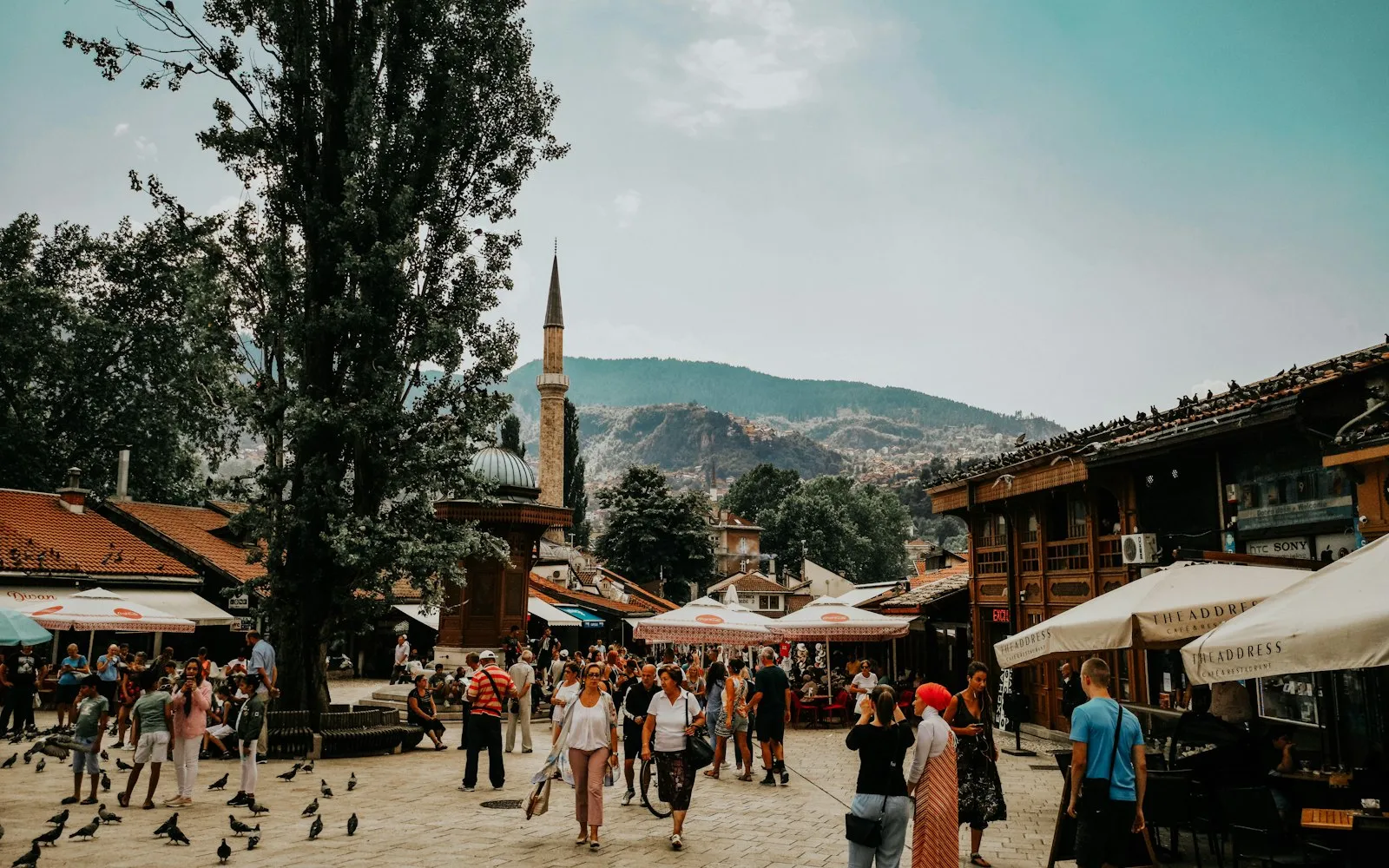
Sarajevo is the historic, resilient capital of Bosnia and Herzegovina, the storied city of the Balkan valley that threads its turreted old town, its mosques, its churches and its synagogues through the narrow gorge of the Miljacka river, between the steep green ridges of the Dinaric mountains. The famous crossroads of the civilisations and the religions, ruled at various times by the Ottomans, the Austrians and the Yugoslavs, and known as the Jerusalem of Europe for the proximity of its synagogues, its mosques and its churches, it carries four centuries of the European and the Ottoman history in its lanes, and carries equally the deep scars of the terrible siege of the 1990s within the memory and the walls of its citizens. The old bazaar of the city, the great mosque and the cathedral, the bridges of the river and the tunnels and the museums of the siege anchor the essential visits, while the mountain peaks and the ski slopes of the surrounding ridges and the cafes and the municipal life of the town keep the everyday soul of the capital. Beautiful, wounded and endlessly dignified, Sarajevo is the heart of the meeting of the East and the West of Europe.
About Sarajevo
Sarajevo is the capital of Bosnia and Herzegovina. The city's documented population is around 275,000 people. For visitors from abroad, the local currency is the Convertible Mark (BAM) and Bosnian, Croatian and Serbian are spoken; the dialling code is +387.
The Bazaar of the Old Town and the Bridges of the River
Sarajevo is a compact, walkable mountain city where the essential circuit moves between the old bazaar and the historic religious quarter, the riverside bridges and the museums of the city, with the tunnels and the monuments of the siege anchoring the memorial days. The great bazaar of the old town, with its copper lanes, its galleries and its cafes, the huge mosque and the cathedral of the centre and the fortress of the hill above the town anchor the classic visits, while the tunnel of the siege, the red roses of the mortar markings and the museum of the war frame the recent memory. The trams of the town, the viewpoints of the surrounding mountains and the day trips of the ski slopes and the villages of the canyon complete the deep, layered circuit of the Balkan capital.
The Mosque, the Synagogue and the Churches of the Gorge
The climate of the city is the sharp continental alpine, with the cold, snowy winters and the skiing of the surrounding mountains, the mild, green springs, the warm summer days and the golden autumns of the valleys. The mark of the country is the currency, with the Bosnian, the Serbian and the Croatian the languages of the capital and some English among the young. The bazaar, the bridges and the museums make the core circuit, and walking covers the heart of the old town with ease. Layered, season-appropriate clothing and comfortable shoes for the steep lanes of the city complete the simple preparation for the mountain capital.
The Tunnel of the Siege and the Fortress of the Hill
The old bazaar of the capital, the bazaar district of the Ottoman town with its dome, its stone and its wooden lanes of the coppersmiths and the silversmiths, its small mosques and its tea gardens, anchors the oriental heart of the city, and the historic continuation beyond its gate holds the grand cathedral, the orthodox cathedral with its famous towers and one of the great synagogues of the region within a few minutes of each other, in the perfect demonstration of the city many faiths. The latin bridge of the river, where the events of the century set off the great war, and the tunnel of the siege with its museum of the years of the city during the war, preserve the two great historical burdens of the city, while the fortress of the hill, the walls of the old castle reached by the funicular with its panoramic terraces over the whole valley, completes the deep and painful, moving and magnificent identity of the capital of the Balkans.
Report an error or suggest an update
- Country
- Bosnia and Herzegovina
- Population
- 275,000
- Capital
- Sarajevo
- Region
- Europe
- Currency
- Convertible Mark (BAM)
- Languages
- Bosnian, Croatian, Serbian
- Calling code
- +387
- Country code
- BA
Entry requirements for Bosnia and Herzegovina
Visa status for travellers from common origins visiting Bosnia and Herzegovina for tourism.








Frequently asked questions
Is Sarajevo the capital of Bosnia and Herzegovina?
Yes — Sarajevo is the capital of Bosnia and Herzegovina.
What currency do I need in Sarajevo?
The local currency is the Convertible Mark (BAM). Languages spoken in Bosnia and Herzegovina include Bosnian, Croatian and Serbian.
What is the dialling code for Bosnia and Herzegovina?
The international dialling code for Bosnia and Herzegovina is +387.
Do I need a visa to visit Bosnia and Herzegovina?
It depends on your passport. Among the origins we track, travellers from Australia, Canada, France, Germany and Italy currently enter Bosnia and Herzegovina visa-free for tourism. Use the entry requirements tool to check your own nationality and purpose of travel.
Flying out of Sarajevo? Check the entry requirements for your destination in our entry requirements tool before you fly.