DublinCapital
Ireland · Country profile
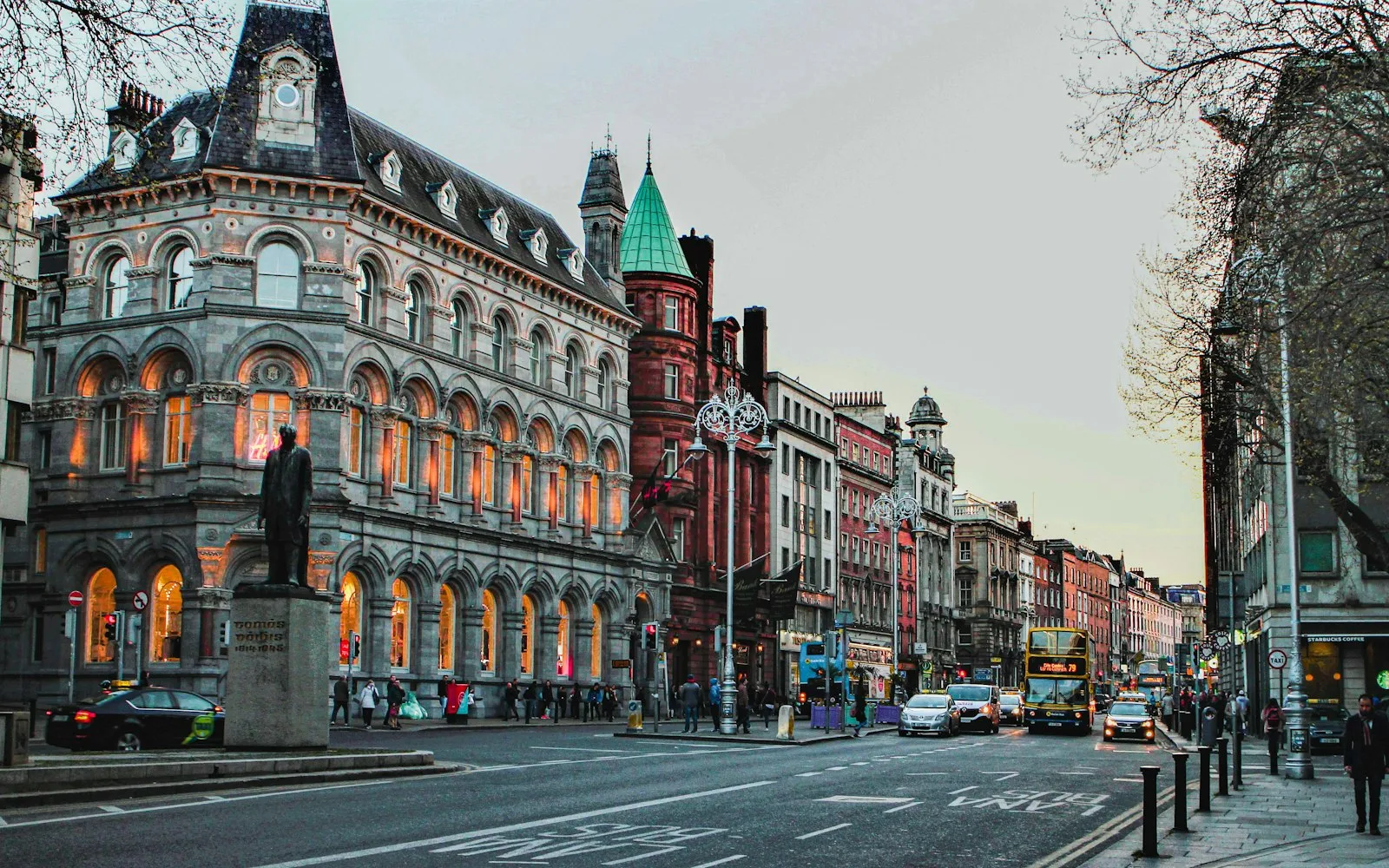
Dublin is a compact, gregarious capital where a Viking-era street grid, Georgian squares and a riverfront of stone bridges hold a city famous for its pubs, writers and warm welcomes. The Guinness Storehouse, Trinity College’s old library and the Book of Kells anchor the classic circuit, but the real city lives in the lanes of Temple Bar, the markets of Smithfield and the red-brick terraces that roll toward the sea. A short walk or a DART train ride reaches coastal villages, cliff walks and the beaches of the bay, and the hill of Howth rings the harbour at the northern edge. Small enough for a weekend and rich enough for a week, Dublin hums with talk, music and history at every corner.
About Dublin
Dublin is the capital of Ireland. The city's documented population is around 592,713 people. For visitors from abroad, the local currency is the Euro (EUR) and English and Irish are spoken; the dialling code is +353. It is served by 1 airport in our guide: Dublin Airport.
A Small Capital Where the Pub Is the Living Room
Dublin is a small capital packed with history, and most of what draws visitors sits in a walkable band between the river and the Georgian squares. It is a talkative, music-loving city — the pub scene is the beating heart, and the live sessions, the football banter and the warm conversation are part of the attraction. The pace is easy, the scale is human, and the sea is always near: the DART train runs along the coast to the beaches, the cliffs and the fishing village of Howth. It feels less like a big-city destination and more like a lively town that happens to be a capital.
Friday Traffic, Booked Sights and the Four-Seasons Forecast
Dublin’s star attractions draw queues in summer, so book the Guinness Storehouse, the Book of Kells and the big museums ahead of time, especially in June to August. The weather is famously four-seasons-in-one — pack layers and a rainproof jacket whatever the month, and the sun can still be bright in the same afternoon. Friday evening traffic and the weekend crowds along the tourist mile are worth timing around. Card payment is the norm, though a little cash helps at markets and for small purchases. The airport is convenient, and the DART and LUAS get you across the city and to the coast in minutes.
Trams, Coastal Trains and Pints the Local Way
The DART train is the best way to reach the coast by Howth and the seaside villages, while the LUAS tram is the quickest cross-city ride; both take the same ticket as the city buses. Pubs here are social and can be busy, but the best-known Temple Bar strip is the most touristy — venture to the locals’ pubs for the real sessions. Meals run a little early by southern European taste, so dinner before nine is standard. The city is walkable and safe, but the lanes of the old centre can be cramped and wet — wear grip. English is the language, and the local wit is part of the charm.
Report an error or suggest an update
- Country
- Ireland
- Population
- 592,713
- Coordinates
- 53.4213, -6.2701
- Capital
- Dublin
- Region
- Europe
- Currency
- Euro (EUR)
- Languages
- English, Irish
- Calling code
- +353
- Country code
- IE
Entry requirements for Ireland
Visa status for travellers from common origins visiting Ireland for tourism.








Getting to Dublin
Airports we list for Dublin:
Frequently asked questions
Is Dublin the capital of Ireland?
Yes — Dublin is the capital of Ireland.
What currency do I need in Dublin?
The local currency is the Euro (EUR). Languages spoken in Ireland include English and Irish.
What is the dialling code for Ireland?
The international dialling code for Ireland is +353.
Which airport should I fly into for Dublin?
Dublin Airport (DUB) is the airport we list for Dublin.
Do I need a visa to visit Ireland?
It depends on your passport. Among the origins we track, travellers from Australia, Canada, France, Germany and Italy currently enter Ireland visa-free for tourism. Use the entry requirements tool to check your own nationality and purpose of travel.
Flying out of Dublin? Check the entry requirements for your destination in our entry requirements tool before you fly.