AmsterdamCapital
Netherlands · Country profile
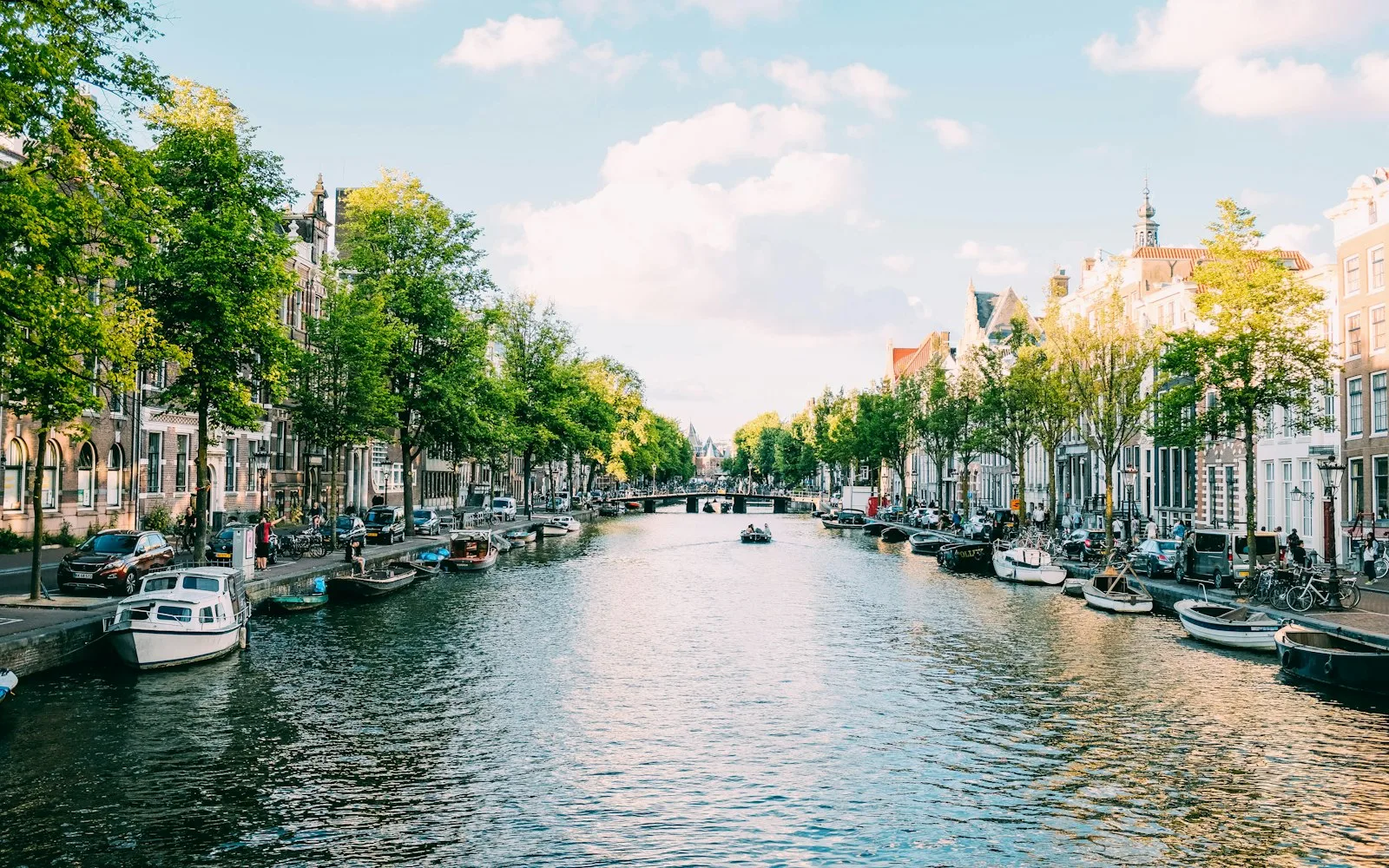
Amsterdam is a charming canal city where bicycles outnumber cars and the historic gabled houses lean gently over willow-lined waterways. The city’s museums — the Rijksmuseum, the Van Gogh Museum and the Anne Frank House — are world class, while the Jordaan and De Pijp offer canalside cafés, markets and a laid-back local life. It’s compact enough to explore by bike or on foot, with the canals, houseboats and bridges making every corner photograph-worthy. Add day trips to the windmills of Zaanse Schans or the tulip fields outside town, and Amsterdam becomes an easy, endlessly pleasant city break.
About Amsterdam
Amsterdam is the capital of Netherlands. The city's documented population is around 942,504 people. For visitors from abroad, the local currency is the Euro (EUR) and Dutch is spoken; the dialling code is +31. It is served by 1 airport in our guide: Amsterdam Schiphol Airport.
A Walkable City Built Around a Web of Canals
Amsterdam is a small, walkable city built around a web of canals, and most of the historic centre is best covered on foot or by bike rather than by metro. It is a short visit type of destination — a few days of museums, canals and neighbourhood cafés, with easy rail day trips to windmills, tulip fields and the coast. Cyclists dominate the streets in a way that surprises many visitors, so you must share the road with confidence. The centre is packed in peak months, but the surrounding districts are where the calm, everyday city lives.
Timed Museum Slots and the April Tulip Rush
The three headline museums all require timed tickets in season — book the Rijksmuseum, Van Gogh and Anne Frank well ahead to guarantee slots. Bike hire is the classic way to get around, but only if you are comfortable in heavy traffic; walking and trams work fine otherwise. Spring, especially April, is the tulip high season and the busy period; the Dan loses nothing in summer. Hotels in the centre are pricey, so staying just outside and taking the tram is a common trick. Cash is rarely needed — cards are king.
Trams, Bike Lanes and Where the Centre Turns Calm
The trams are easy to use and reach the museums, markets and harbour districts; day passes cover unlimited rides. Watch for trams when cycling — the rails catch tyres — and never walk in the bike lanes. The Jordaan and De Pijp are the food-and-café districts, quieter than the canal ring. Most museums close on Mondays, so plan your cultural days around that. It is a famously tolerant city, but that cuts both ways: some areas are rowdy at night. Rain is common and sudden, so a packable layer is essential. The airport is close to the city and fast to reach by train.
Report an error or suggest an update
- Country
- Netherlands
- Population
- 942,504
- Coordinates
- 52.3105, 4.7683
- Capital
- Amsterdam
- Region
- Europe
- Currency
- Euro (EUR)
- Languages
- Dutch
- Calling code
- +31
- Country code
- NL
Entry requirements for Netherlands
Visa status for travellers from common origins visiting Netherlands for tourism.

Getting to Amsterdam
Airports we list for Amsterdam:
Frequently asked questions
Is Amsterdam the capital of Netherlands?
Yes — Amsterdam is the capital of Netherlands.
What currency do I need in Amsterdam?
The local currency is the Euro (EUR). Languages spoken in Netherlands include Dutch.
What is the dialling code for Netherlands?
The international dialling code for Netherlands is +31.
Which airport should I fly into for Amsterdam?
Amsterdam Schiphol Airport (AMS) is the airport we list for Amsterdam.
Do I need a visa to visit Netherlands?
It depends on your passport. Among the origins we track, travellers from Albania, Andorra, Antigua and Barbuda and Argentina currently enter Netherlands visa-free for tourism. Use the entry requirements tool to check your own nationality and purpose of travel.
Flying out of Amsterdam? Check the entry requirements for your destination in our entry requirements tool before you fly.